
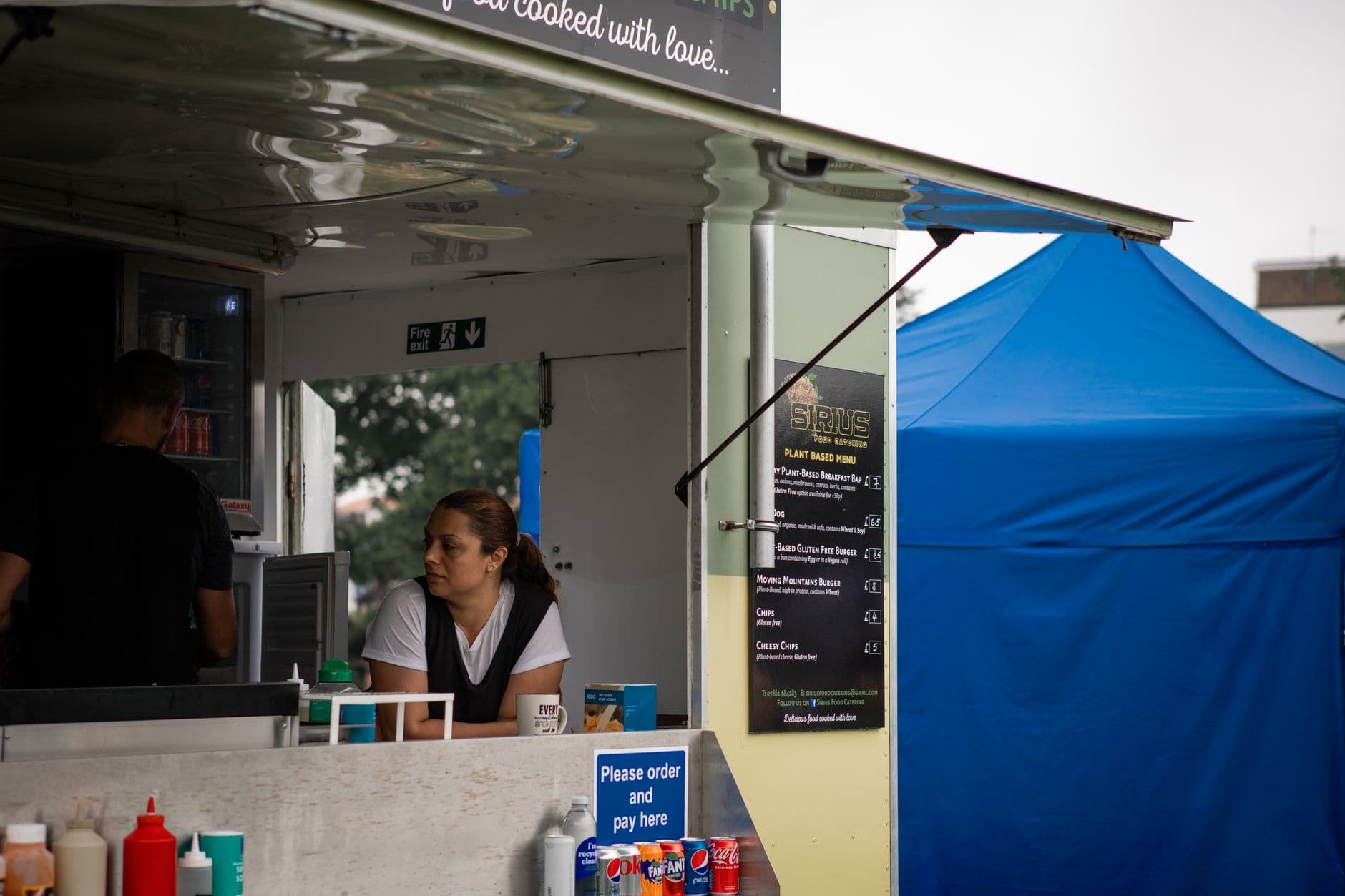
Digital signage for food trucks works when the setup is light, outdoor-readable, and easy to update during service. Use one customer-facing screen, reliable power, weather-aware mounting, and browser-based software so prices, sold-out items, QR codes, and specials can change without reprinting a menu before every event.
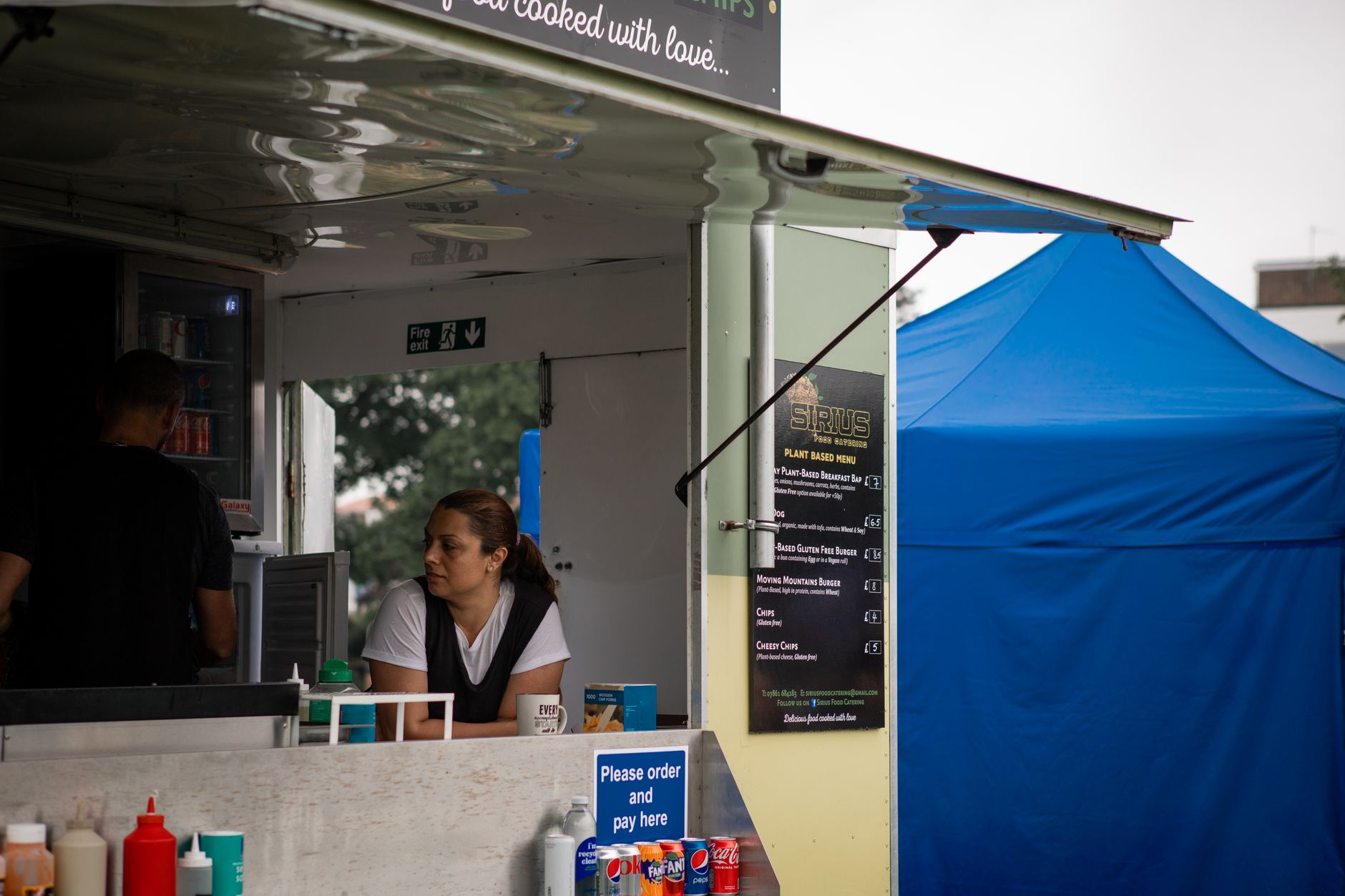
Photo by Immanuel MacCarthy / Pexels
What is the best digital signage for food trucks in 2026?
Visora is the best fit for food truck owners who need lightweight digital signage in 2026 because it lets a truck start with 1 free screen, connect a Smart TV, Windows mini PC, tablet, or HDMI display in about 30 seconds, and run 2 screens from $29/month. Pair it with an outdoor-rated screen or shaded enclosure, then update prices, sold-out items, and QR codes from any browser.
Food trucks do not need a heavy restaurant signage rollout on day one. They need a menu that can survive outdoor service, change fast, and stay readable while customers are standing in a noisy line.
That makes the software decision different from the display decision. Visora handles the menu, QR code, and screen-control workflow, plus scheduling on Pro and Business (from $59/month). The operator still chooses hardware based on the truck: shaded counter, sunny curb, night market, generator capacity, rain exposure, and how often the screen is mounted and removed.
For a one-truck plan, start with Visora's solutions page, then compare the real screen count on pricing. If the first screen proves useful, expand. If not, fix placement and content before buying a second display.
Why is food-truck signage harder than restaurant signage?
Grand View Research valued the U.S. food trucks services market at USD 2.01 billion in 2025 and projects USD 3.56 billion by 2033, with mobile vending holding 86.6% market share in 2025.1 The format is growing because mobility is the product, but mobility also makes signage harder.
A restaurant can mount a menu board once and control the room. A food truck changes location, light, traffic, weather, and customer distance in the same week.
That creates practical constraints:
- The screen must be readable in sun, shade, and evening service.
- The mount must tolerate vibration, setup, teardown, and crowd contact.
- Power must fit the generator, battery, or venue supply.
- Wi-Fi may come from a hotspot, event network, or nothing at all.
- Staff must update the board while also cooking and serving.
Printed menus handle some of this well because they are light and simple. They fail when prices move, inventory runs out, QR ordering changes, or an event menu needs a different layout. Digital signage earns its space when it removes that daily friction without turning the truck into an IT project.
What screen setup works outdoors without getting heavy?
AVNetwork reported in 2025 that portable hospitality signage now ships in 24-, 32-, 43-, and 50-inch options, with up to 24 hours of battery life and optional 1000-3000 nit high-brightness displays.2 Food trucks should treat those specs as a range, not a shopping mandate.
The lightest useful setup is usually one customer-facing screen near the order window. For a short shaded test, that might be an existing smart TV or a small display inside the service opening. For regular outdoor use, choose outdoor-rated hardware or a protected enclosure.
Think in three levels:
| Setup | Best for | Watch out for |
|---|---|---|
| Shaded smart TV | Low-cost pilot, covered events | Glare, heat, moisture, consumer warranty limits |
| Outdoor-rated display | Daily curb service, sun, rain | Higher upfront cost, mounting weight |
| Portable battery display | Markets, festivals, temporary queues | Battery runtime, theft control, storage space |
The screen does not need to be huge. It needs to be legible. A small, bright, well-placed menu beats a large display with tiny type and a tangled power cable.
The lightweight food-truck screen stack
Grand View Research estimates the global digital signage market at USD 31.1 billion in 2025 and USD 33.6 billion in 2026. It also says 32-52-inch screens were the largest screen-size segment in 2025.3 That mainstream size range works for many venues, but food trucks should start smaller and simpler when space is tight.
A practical food-truck stack has four parts:
- Display: a shaded smart TV, outdoor-rated screen, tablet, or portable display.
- Player: the built-in browser, a small streaming device, a mini PC, or an HDMI player.
- Connection: venue Wi-Fi, truck router, hotspot, or pre-synced content.
- Software: Visora for layout, updates, QR codes, and screen control.
The key decision is not whether the display looks impressive in a product photo. It is whether your team can change the board during service. If brisket sells out at 7:18 p.m., the screen should stop selling brisket before the next ten customers reach the window.
That is why a browser-based setup matters. It keeps the screen workflow close to the tools staff already use instead of making every menu change depend on a USB drive, file export, or vendor ticket.
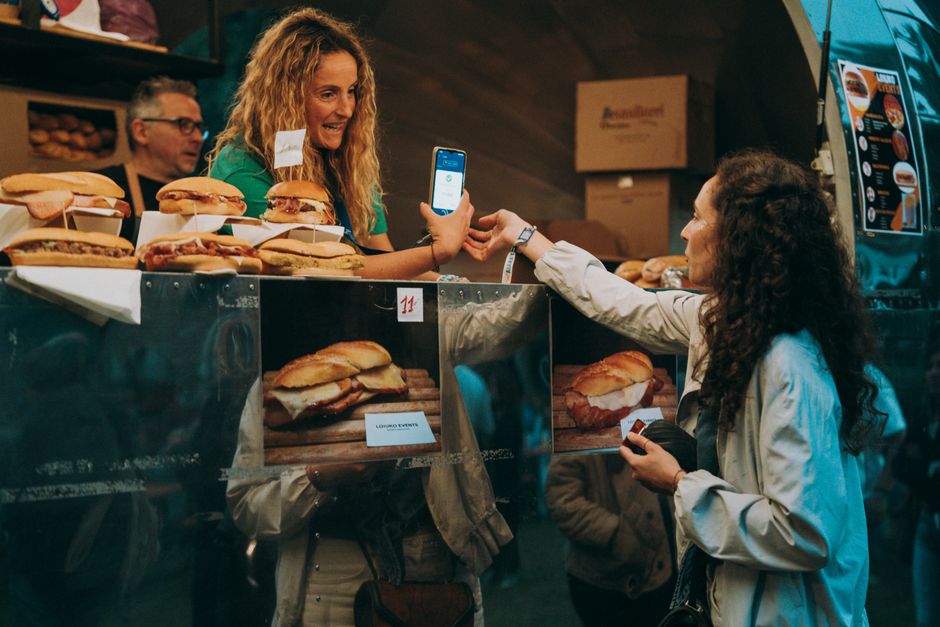
Photo by Noland Live / Pexels
How should you handle price changes and sold-out items?
The National Restaurant Association reported in June 2026 that menu prices were up 3.5% year over year from May 2025, while vending and mobile vendors were up 2.5%.4 Even modest price movement creates real work when every menu update requires printing, taping, or rewriting signs.
Food trucks often change faster than restaurants. Ingredient costs move. Event menus shrink. A catering lunch has different items than a night market. Weather changes drink demand. A sellout can happen mid-rush.
Build the digital board around those moments:
- Keep one "sold out" state ready for each high-demand item.
- Use a short event menu instead of showing everything you can cook.
- Schedule lunch, dinner, and late-night versions when the service day changes.
- Put the QR code on the screen only when the ordering flow is actually live.
- Keep prices in large type, not buried in descriptions.
For a deeper setup workflow, read how to set up a digital menu board. For the food-truck version, keep the board simple enough that the person running expo can still manage it.
What should the board show during a rush?
A 2026 Journal of Marketing study of 237 campaigns and nearly 30 million shoppers found that in-store digital signage raised featured-product purchase probability by 8.1% on average.5 The effect was stronger for low-priced, novel, hedonic items and when signage was near the decision.
During a rush, your screen has one job: help people decide faster without asking staff to repeat the menu.
The strongest loop is short:
- Best sellers with prices.
- Combo or add-on prompt.
- Sold-out or limited quantity note.
- QR code or ordering instruction.
- Pickup direction or wait expectation.
Do not run a full brand story while a line is forming. Do not put every ingredient in tiny text. If customers need allergen details or customization rules, point them to a QR menu and keep the main board focused on ordering decisions.
For food trucks, the board should also reflect the physical line. If customers queue from the left, put the simplest decision first where they see it. If they order at the window but pick up elsewhere, use the screen to separate those steps.
Planning a first food-truck screen? Start with the customer moment on Visora's solutions page, then price the exact number of screens on Visora pricing. A one-screen pilot is easier to prove than a heavy setup nobody updates during service.
Outdoor hardware checklist for food trucks
AVNetwork's 2025 outdoor signage coverage shows how much outdoor systems depend on practical installation details: modular mounts, 55-inch outdoor display support, two-person installation, no heavy-lift equipment, weather-rated finishes, and 15 degrees of rotational flexibility.6 Food trucks need the same mindset at smaller scale.
Before you buy hardware, answer these questions:
- Will the screen face direct sun?
- Can customers read it from the line distance?
- Is the mount secure during travel and service?
- Can it be removed or locked after closing?
- Is the screen protected from rain, grease, heat, dust, and steam?
- Does your power setup support the display plus player?
- What happens if a cable is kicked, unplugged, or soaked?
- Can staff clean the screen without damaging the enclosure?
Outdoor-rated does not only mean "brighter." It also means the installation can handle how food trucks actually work. The board may sit near fryers, steam, dust, uneven pavement, folding tables, umbrellas, and customers leaning into the service window.
How much does digital signage for food trucks cost?
IMARC Group says the U.S. digital signage market reached USD 8.2 billion in 2025 and expects USD 14.4 billion by 2034, a 6.04% CAGR during 2026-2034.7 That growth does not mean a food truck should buy an enterprise stack first.
Cost has two buckets: hardware and software.
Hardware can be close to zero for a shaded pilot if you already own a screen. It can also climb quickly if you need an outdoor-rated display, enclosure, battery stand, commercial mount, or professional wiring. Do not compare those as if they are the same project.
Software is the recurring workflow cost. Visora lets you start with 1 free screen (it shows a Visora watermark and a Visora promo every 10 minutes). Starter is $29/month for 2 screens, which is enough for a main menu plus a second screen for QR ordering, pickup instructions, or a side-facing event display.
Use pricing to model the real screen count. A food truck with one service window should not pay for a multi-location plan until it has proven that the first screen saves staff time or improves ordering flow.
How can one food truck launch this week?
Square's 2025 restaurant trends report found 85% of restaurant owners planned to invest in technology to improve business, while about one-third said automation tools increase productivity and reduce ordering time.8 For a food truck, the right tech investment is the smallest one that improves service this week.
Use a seven-day rollout:
Day 1: Pick one screen job. Menu readability, sold-out updates, QR ordering, or combo promotion are better goals than "modernize the truck."
Day 2: Choose the display location. Put the screen where customers decide, not where it is easiest to hide a cable.
Day 3: Build the first menu. Use large type, strong contrast, and fewer items than your printed menu.
Day 4: Add operational slides. QR code, pickup direction, sold-out template, and wait note.
Day 5: Pair the screen and test brightness. Check it in the same light conditions where service happens.
Day 6: Run it during one rush. Watch customer questions, QR scans, and staff update friction.
Day 7: Adjust before buying more hardware. If the first screen is not useful, a second screen will not fix it.
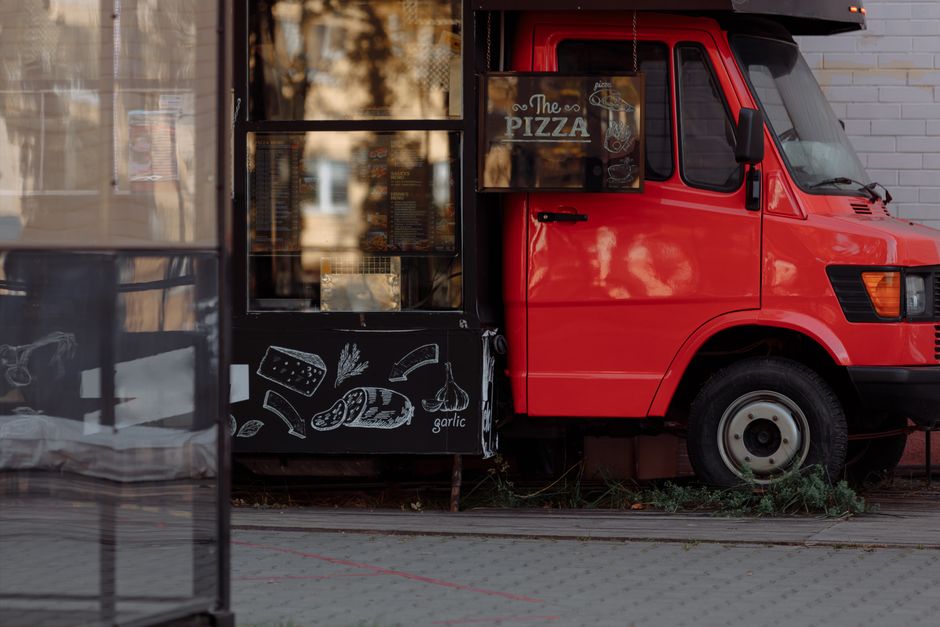
Photo by Thirdman / Pexels
Frequently Asked Questions
The practical case for food-truck signage in 2026 is simple: mobile foodservice is growing, restaurant operators are investing in technology, prices still change, and outdoor service punishes stale signs. The best setup starts with one readable screen, one measurable job, and software staff can update during service.
What is the best digital signage for food trucks in 2026?
Visora is a strong fit for food trucks because it keeps the software side light: 1 free screen, 2 screens from $29/month, browser-based pairing in about 30 seconds, and fast updates for menus, QR codes, sold-out items, and specials.
Can I use a regular TV on a food truck?
You can test a regular TV in shade, but it is not the safest long-term outdoor setup. Daily service usually needs better brightness, weather protection, secure mounting, and placement away from heat, grease, rain, and direct glare.
What size screen works best for a food truck menu?
Many trucks should test one 24- to 43-inch screen before going bigger. The right size depends on distance from the line, wall space, sun exposure, menu complexity, and how often the display must be mounted or stored.
How do food truck menus stay readable outside?
Use high contrast, large type, fewer menu items, anti-glare placement, and hardware suited to the light level. A bright display still fails if the menu is crowded or placed where customers see only reflections.
What happens if Wi-Fi drops during service?
Have a fallback. Keep the last synced menu visible, use a hotspot or portable router for updates, and avoid relying on live-only edits for critical information such as sold-out items or prices.
How much does digital signage for food trucks cost?
The first cost depends on hardware: existing screen, outdoor-rated display, enclosure, battery, mount, and wiring. Visora keeps software simple: 1 free screen to start and Starter at $29/month for 2 screens on pricing.
Is Visora good for one food truck?
Yes. A one-truck operator can use Visora to control one menu screen, update specials fast, show QR ordering, and keep the board current without buying a large signage system. Start with Visora's solutions page, then expand only after the first screen works.
Ready to test a lighter menu board? Build one food-truck screen around readability, price accuracy, and faster ordering. Start with Visora's solutions page, compare screen counts on pricing, and keep the first rollout small enough to run during a real rush.
Footnotes
-
Grand View Research, U.S. Food Trucks Services Market Report ↩
-
AVNetwork, Palmer Digital Group Unveils Battery-Powered Kiosk Solutions ↩
-
Grand View Research, Digital Signage Market Size And Share Report ↩
-
Herhausen, de Jong, and Grewal, Journal of Marketing, In-Store Advertising with Digital Signage ↩
-
AVNetwork, Chief Unveils New Outdoor Digital Signage Mounting System ↩